
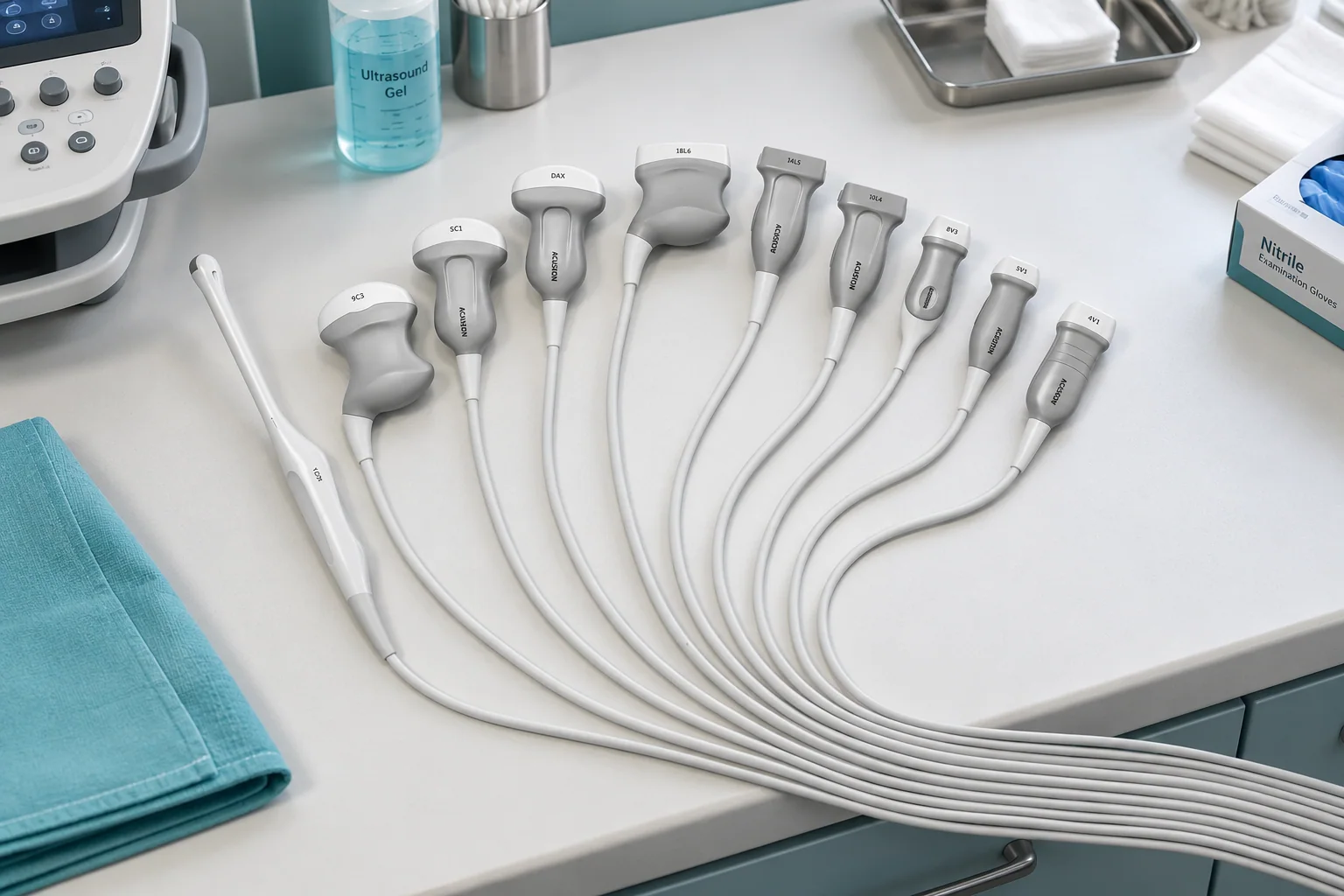
Spare Parts & Consumables
Genuine parts and consumables held for supported platforms.
Order by item identity, not by appearance
A replacement probe, cable, filter, sensor or disposable can look familiar and still be incompatible with a particular device configuration. Start with the manufacturer’s item reference and the equipment it will be used with. Keep capital spares, routine consumables and accessories on separate lines so that compatibility, shelf life and replenishment can be assessed correctly.
For equipment-specific items, supply the model, serial number, installed options and relevant software version. Include a clear image of the item label when a part number is difficult to read. For disposables, specify the size, connector, sterility, single-use status and purchasing unit required by the approved product specification.

The information that makes a quotation comparable
| Item type | Details to send | Details to compare |
|---|---|---|
| Equipment spare | Manufacturer part number, parent asset, fault context and quantity. | Exact compatibility, new or exchange basis, lead time and warranty. |
| Clinical consumable | Item code, specification, size, sterile status and expected consumption. | Pack contents, unit price, expiry and delivery schedule. |
| Reusable accessory | Device model, connector and required application. | Cleaning instructions, compatibility and included components. |
| Reagent or test product | Instrument, assay, catalogue code and purchasing pack. | Usable yield, storage requirements and remaining shelf life. |
Keep the unit of measure consistent
A box, carton, case, pair and individual item are different purchasing units. Convert the hospital’s demand into the supplier’s pack size before comparing prices. Keep both numbers on the order: purchasing packs and the corresponding individual units. When two quotations contain different pack sizes, compare the cost per usable unit as well as the cash required for the order.
Set replenishment around lead time
Usable on-hand stock excludes expired, damaged and quarantined items. Confirmed inbound stock contributes to the plan only if it will arrive within the relevant period. Deduct reserved stock before calculating inventory position. Review recent consumption alongside changes in caseload, instrument configuration or service schedules.
The reorder point covers lead time plus the safety allowance selected by the hospital. A periodic order also covers the interval until the next stock review. The calculator below shows those two quantities separately and rounds replenishment up to full purchasing packs.
Plan shelf life and critical spares differently
Consumables need lot and expiry visibility, with first-expiry-first-out allocation where appropriate. A low-use critical spare may need a different decision: failure impact, replacement lead time, repair options and whether the part can be shared across compatible systems. An average daily-use model is useful for routine consumption, but does not determine which emergency parts a hospital should hold.
Send a dated stock list, the exact item references and the delivery locations with the enquiry. State whether partial deliveries, scheduled releases or equivalent alternatives may be considered. Evaluate any proposed alternative against the hospital’s technical specification before ordering.
The right component starts with the right equipment.
Keep model references, connector types and purchasing units together when planning replacement accessories.
Discuss parts and consumables
Consumable reorder and stock cover
Move the sliders to plan your requirement. Use hospital records or quoted costs for your purchasing discussion.
k = thousand; m = million; b = billion.
Your estimate
Adjust the figures for your requirement.
Take the estimate with you
How this estimate is calculated
Inventory position = usable on-hand + inbound − reserved. Reorder point = daily use × (lead time + safety days). Target = daily use × (lead time + safety days + review interval). Packs = ceiling(max(0, target − position) ÷ pack size).
Use consumption from your own records. On-hand stock excludes expired, damaged and quarantined units. Inbound stock must arrive within the planning horizon. The result is a periodic-review replenishment quantity; supplier minimum order quantities are additional constraints.
Initial figures are an illustrative example. Adjust them to your requirement before discussing a purchase.
Request a quotation
Send your specification, bill of quantities or tender document. Our team responds with a formal quotation and availability.