
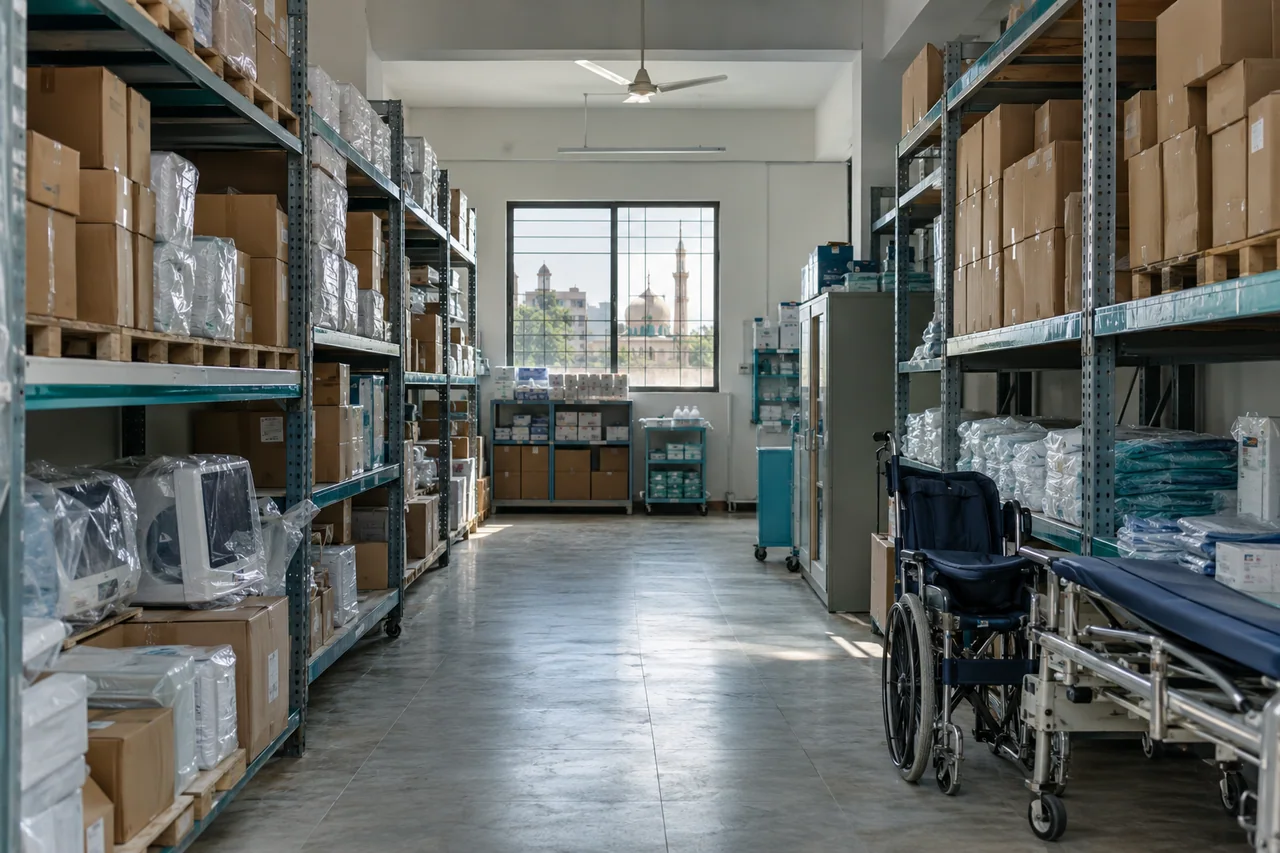
Medical equipment & hardware
The hardware division brings together medical equipment systems used in the operating room, intensive care and specialist diagnostic settings. The corporate profile includes high-performance anaesthesia and ventilation systems, heart-lung machines, operating lights, surgical tables, lithotripsy systems, blood gas analysers, nuclear medicine systems and modular operating rooms.
An equipment requirement connects the principal system with compatible accessories, the intended application and the environment in which it will be installed. Room preparation, utilities, interfaces and training can be as important to the project schedule as the equipment delivery.
Medical devices & disposables
The devices and disposables division combines single-use medical products with specialist therapy and procedure supplies. Cardiac perfusion products described in the profile include oxygenators, cannulae and catheters for on-pump and off-pump cardiac surgery, alongside heart valves and extracorporeal life-support systems.
The wider scope includes supplies for interventional cardiology, vascular surgery, gynaecology, neurovascular procedures and dialysis. A purchasing schedule identifies the exact item reference, compatibility, pack size and the quantity required for the approved clinical workflow.
Recurring supplies connect the procedure schedule with usable stock, replenishment lead time and purchasing units. The parts and consumables worksheet helps procurement teams explore those relationships with their own figures.
Pharmaceuticals
The company profile presents pharmaceutical products as the third business division, with vaccines, antibiotics and specialist medicines within its portfolio. Hospital purchasing connects the requested medicine and presentation with pack size, receiving requirements and the procurement schedule.
Planning should start from the institution’s approved product list and consumption records. The website’s pharmacy inventory calculator works with purchasing units and stock figures; the cold-chain space calculator helps assess storage volume using the hospital’s own usable-capacity figures.
Turnkey projects connect the divisions
The profile describes turnkey project partnerships spanning engineering design, equipment procurement, system integration, installation, testing, commissioning and after-sales support. For a hospital programme, this connects room and department requirements with the equipment package and recurring supplies.
The project brief should bring together department scope, offered configurations, interfaces, delivery stages, commissioning responsibilities and the support plan. These can then be reviewed by the procurement, clinical, facilities and biomedical engineering teams as one coordinated requirement.
Explore solutions by sectorShared service and training
SYS-CARE service support and the training programme work across the equipment lifecycle. Planning connects installed assets with preventive maintenance, troubleshooting, spare parts and the knowledge users need for everyday operation.
Use the service directory to choose the worksheet suited to your engagement: equipment installation, maintenance workload, AMC and CMC comparison, spare-parts replenishment, training capacity or lifecycle purchasing cost.
Explore all procurement tools